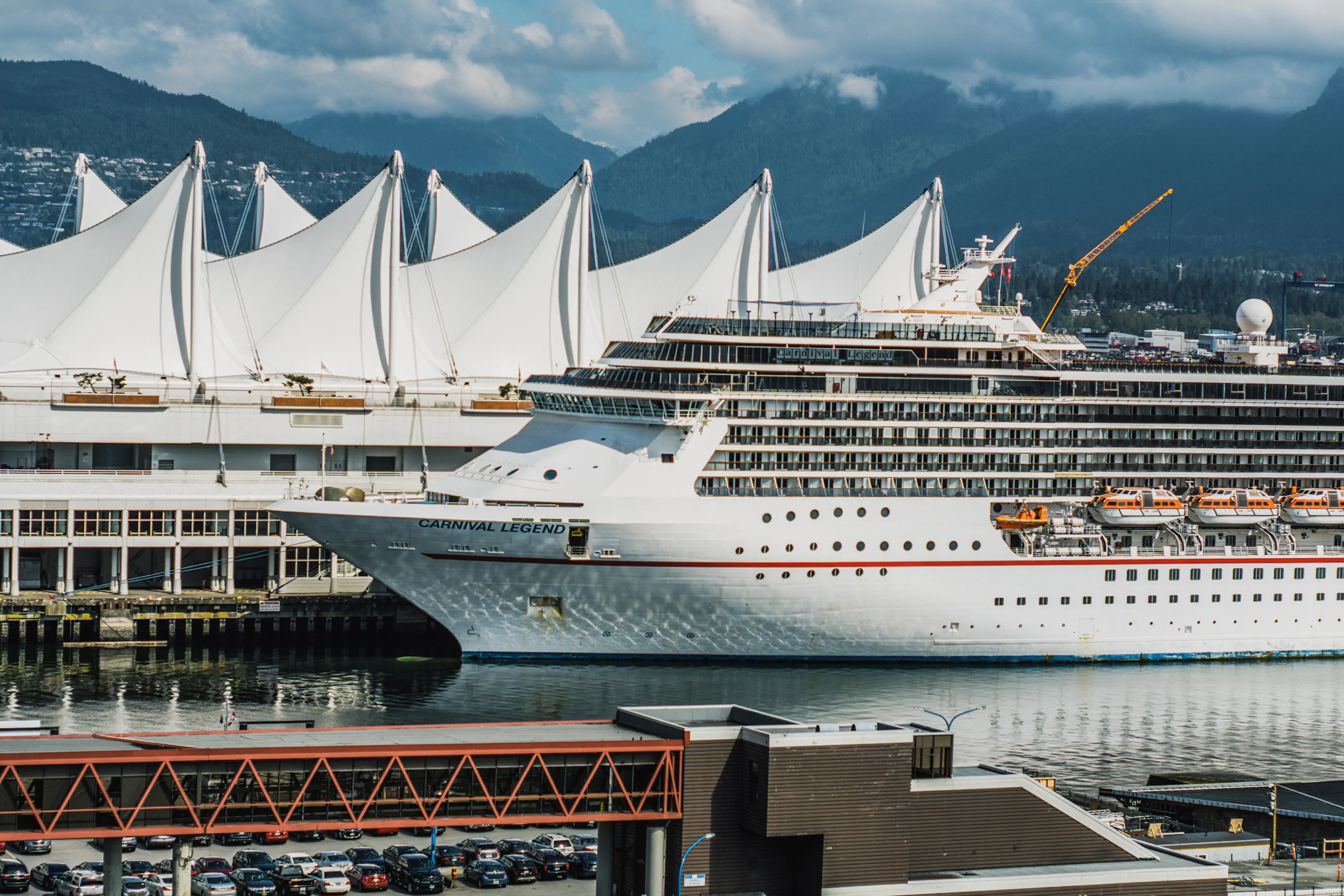
Carnival Legend at Canada Place Cruise Ship Terminal, Vancouver
Carnival Legend fills the berth at Vancouver's Canada Place Cruise Ship Terminal, almost hiding the building whose white sails have become shorthand for the waterfront. The ship is modern. The idea underneath it is not.
Canada Place occupies the site of Canadian Pacific's Pier B-C, opened in 1927 for the company's Empress liners, coastal steamships, freight and passengers moving between Vancouver, Asia, Australia and the rest of the Pacific. The name sounds more patriotic in hindsight than it actually was. B-C simply meant the pier sat between Pier A and Pier D.
By the 1970s, air travel had done serious damage to the old trans-Pacific passenger business and Pier B-C was nearly abandoned. British Columbia started clearing the site for a convention centre, then killed the project during the 1980 recession. For two years the partly dismantled pier sat empty. The federal government eventually took it over for Expo 86 and built Canada Place on what remained.
A federal business magazine from 1985 is wonderfully confident about what was coming. Canada Place was to be a five-masted schooner in architectural form, carrying a hotel, convention centre and what it called one of the world's finest cruise terminals. Port officials expected more than 200 cruise ships a year and designed the terminal with customs, immigration and baggage facilities directly under the Expo pavilion. One manager boasted that ships would practically be docking on the Granville Street promenade.
The first cruise ship arrived before Expo even opened. Holland America's Noordam entered the new terminal on April 28, 1986, escorted into the harbour for the occasion. Forty years later, Holland America is still calling here.
The terminal itself kept changing. A third berth was added after the pier was extended in the early 2000s. Then in 2009 Canada Place became the first cruise terminal in Canada, and only the third in the world, where equipped ships could shut down their diesel generators and plug directly into shore power. In Vancouver that power comes largely from B.C.'s hydroelectric grid.
So the sails are the postcard, but the pier underneath them has been doing essentially the same job for close to a century: receiving very large ships full of people who intend to go somewhere else.
Join the conversation